How Policing Has Changed (13)

Today’s abbreviation from ‘One In For D & D’ is ‘UC’ which is a term used to describe a police officer working undercover. Nowadays such officers are highly trained and go through rigorous selection procedures. In the 70s and 80s the training was different but many brave officers still placed themselves in ‘harm’s way’ to penetrate organized crime groups. The book ‘Hunting The Hooligans’ describes

how a number of such officers worked undercover in 1987 to gather evidence on a gang of football hooligans. On one occasion four of them were trapped in a pub and subjected to a ‘kangaroo court’ after being accused of being police officers. Fortunately for them a potential target was also wrongly accused at the same time and as tensions rose they managed to talk their way out of a potentially violent situation as they were surrounded by men wielding billiard cues. (The ‘WARD’ cartoon is courtesy  of the British Transport Police History Group who work tirelessly to preserve the history of the Force)
How Policing Has Changed (12)

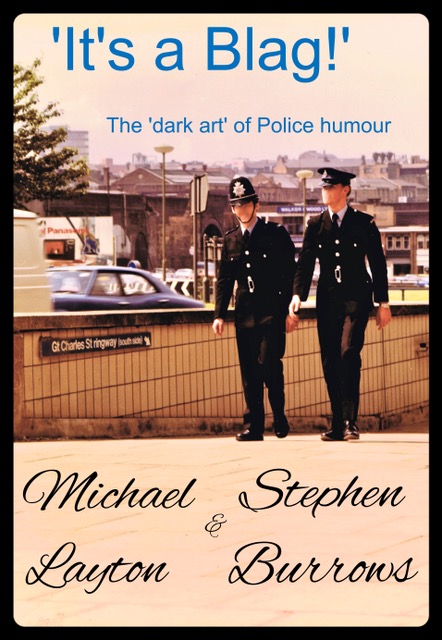
Today’s phrase from ‘One In For D & D’ is ‘Pro Con’ which stands for probationary constable. The pictures are from a new recruit BTP course circa 1971. In those days you were on probation for two years and, apart from the initial twelve week training course and a two week continuation course, much of the experience gained was on ‘the streets’ working as an operational police officer with experienced colleagues. In many ways you would either ‘sink or swim’ but lifetime friendships were formed, young men and women became accomplished ‘thief takers’ and careers were shaped. Whether you regarded yourself as being a member of a police force, or a police service, you were looking at thirty years in ‘the job’.  Nowadays there is much greater emphasis on academic achievement and future ‘Pro Con’s’ are likely to be requi

red to automatically study to degree standard whilst serving their ‘apprenticeship’.

How Policing Has Changed (11)

Today’s little slang words from ‘One In For D & D’ are ‘Peg’ and ‘Cuffs’ which translate to ‘Truncheon’ and ‘Handcuffs’. In reality the old truncheon was not that practical and unless you had practiced the art of looping the thumb through the leather strap in such a way as to make it impossible for someone to pull it from you there was always the risk of having it taken from you. Extendable batons are now the order of the day.

Handcuffs were not routinely issued to all officers for many years and some of the very old ones used for escort purposes used to have a cumbersome screw type key. The latest style of ‘quick-cuffs’ are far more effective providing you can get both hands of the person being detained into them when they are struggling! (The first picture is courtesy of Deb Menzel)

The first British Army soldier to be demobilised after World War I

Something different – an article published in History Hit by a former colleague Kevin Parry who has researched the life of a PC Hill who worked as a police officer in Bedford but was also the first British Soldier to be demobilised after World War I. The link to the article is https://www.history.hit.com/who-was-the-first-british-soldier-to-be-demobilised-after-world-war-one/

How Policing Has Changed (10)

Today’s offering from the little book ‘One In For D & D’ is the abbreviation ‘PSU’ which stands for ‘Police Support Unit’. This is a police term for an Inspector, three Sergeants and three serials of seven constables which normally make up a full PSU. Public Order tactics have been refined and changed over the years but what has not changed is that a highly-trained PSU is a very effective tool in terms of managing large-scale demonstrations, events, public order situations, or simply providing a safe and secure environment for the movement of large numbers of people. (Pictures of a British Transport Police PSU escorting football supporters in London – courtesy of BTP media)

How Policing Has Changed (9)

Today’s abbreviation from ‘One In For D & D’ is S.O.C.O. which translates to ‘Scenes Of Crime Officer’ Nowadays officers wear proper protective clothing when attending crime scenes or postmortems and health and safety is a high priority. In the 70s as CID officers we routinely attended postmortems in our every day suits and stood next to the Forensic Pathologist whilst they carried out their work in the mortuary. People always knew where you had been afterwards because they could smell formaldehyde on your clothing! Challenging personal

experiences but vital in terms of investigatory work. The staff behind the scenes who collect forensic evidence such as DNA or fingerprints are often the unsung heroes who break open a case and find the vital lead. (picture courtesy of the Express & Star)

How Policing Has Changed (8)

Many of us come from a period of policing when small geographical areas had their own dedicated community police officer. Everyone knew them by name and they knew everyone – the local ‘eyes and ears’ of policing and the cornerstone of ‘community intelligence’. Sadly neighborhood policing has suffered somewhat due to financial constraints, and re-organisations, making the sight of local beat ‘bobbies’ much rarer. Our little book ‘One In For D & D’ lists ‘R.B.Os’ as one of the 500 slang words, phrases and abbreviations in use in the West Midlands from the 1970s onward


– ‘Resident Beat Officer’.

How Policing Has Changed (7)

Yesterday it was horses and today it’s man’s best friend – dog’s. Our little book ‘One In For D & D’ lists more than five hundred slang words and phrases used by police officers in the West Midlands from the 1970s onward. The term ‘growler’ was an affectionate term for police dogs. They are trained for many different purposes but undoubtedly are known for ‘saving the day’ when officers are trying to deal with violent situations. It’s a foolish person who ignores the command ‘Stop or I will release the dog!’ The photographs are courtesy of Paul Richards and Andy Fidgett, as well as the BTP History Group. Some are featured in ‘Police Dog Heroes – the history of the BTP Dog Section’.