How Policing Has Changed (20)

The old Bloxwich Police Station was the epitome of how policing used to be. In the 70s and 80s most local police stations had their own cell-blocks and locally-based officers would deal with locally arrested persons in them

. Custody procedures were paper-based but not that time consuming and officers did not have to travel far. Nowadays many local police stations are being closed. Local custody facilities are a thing of the past with ‘super custody hubs’ currently in vogue, and everything is computerised. Officers have to travel further and the rules appertaining to arrest have changed so that officers have to meet a higher threshold before taking someone into custody. Therefore it is not surprising that fewer arrests are being made.

How Policing Has Changed (19)

Traffic policing has always been a core function of policing in the UK and the preservation of life through effective road safety measures, and proper education coupled  with rigorous enforcement remain laudable objectives. In 1997 local Road Policing Units (RPU’s) were set up on each Operational Command Unit in the West Midlands with twelve officers dedicated to the function. Highly trained and hugely effective they also led the way in tackling road-

related crimes such as vehicle theft. At the centre a core specialised traffic function was retained. Nowadays following cut-backs in resourcing levels and ever-changing new priorities you are far less likely to see a dedicated traffic vehicle on our roads. The sad thing is that the criminals know it and so do those who choose to flout road traffic laws.

How Policing Has Changed (18)

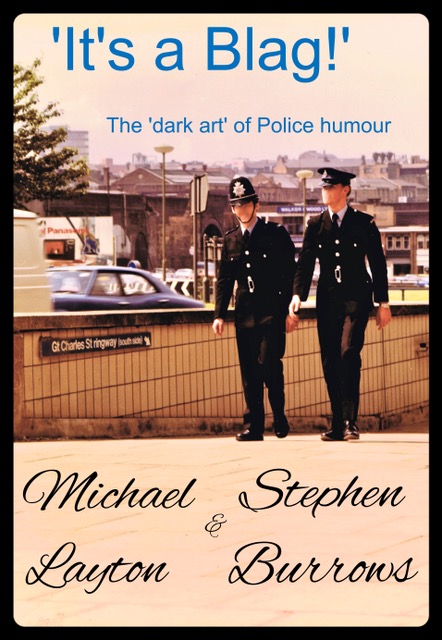
Our little book ‘It’s A Blag: The ‘dark art’ of Police humour’ contains over 100 small stories about the tricks police officers played on each other. The ‘mock’ crime report pictured relates to an occasion when Mike cancelled the CID Christmas function due to work commitments and was reported for ‘theft of Christmas’. Years ago crime reports were completed by hand by the reporting officers and details were eventually inputted onto computer. Nowadays in the digital age a lot of crime reports are inputted directly onto computers using hand-held devices. Technology undoubtedly saves time but has it removed some of the ‘human engagement’ that officers were involved in as they owned their individual reports.

How Policing Has Changed (17)

The photograph (courtesy of Deb Menzel) show’s H.M.P. Winson Green in Birmingham, commonly known to most West Midlands Police officers as simply ‘The Green’. A bit of its history is referred to in the little book ‘One In For D & D’. It was an institution that was visited many times by the authors either to deal with incidents of crime inside the prison or to investigate such things as sudden deaths. On one occasion Mike had to deal with the sad case of a man who died whilst working in the prison kitchens. He was only serving a short sentence. Tragically he was cutting through some frozen meat when the butchers knife went through a soft part and he finished up fatally stabbing himself. CID officers often visited serving prisoners to interview them about other offences which had not been admitted prior to sentence or ‘TIC’d’ – taken into consideration. The practice of ‘writing off’ offences admitted

under Home Office guidelines was common but no longer takes place. The one thing you learnt to do as a police officer inside the prison was to stay underneath the overhead walkways – otherwise you were likely to get some spit on your head!

How Policing Has Changed (16)

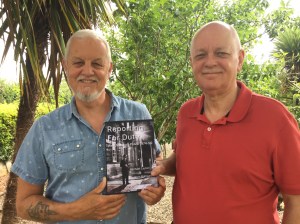
When police officers talk about their work they usually refer to it as ‘the job’. Whilst it is a common phrase it relates to a profession which is unique in its range and scope. The pictures show Mike as a cadet at the age of 16 years tackling an assault course in Elan Valley, Wales whilst another shows Steve tackling the challenges and demands of working as a team on an accelerated promotion scheme. Two careers taking different paths whilst sometimes merging for moments in time. Once in you never really leave ‘the job’ even after retirement. It shapes your values for life and you remain part of the police family with lifelong friendships and memories of the good and the difficult

times which invariably never leave you. Writing books has helped us to preserve some of those memories. Without doubt ‘the job’ has changed over the years and sometimes not for the better but it still remains a great profession to enter – there can be nothing better than public service. Wishing all our supporters a Happy New Year in 2019.

How Policing Has Changed (15)

In the 70s and 80s the so-called ‘beautiful game’ was blighted by organised football-related violence with gangs operating across the UK. As police tactics were developed, CCTV was introduced at grounds, and new legislation passed the situation improved steadily. Nowadays for many football hooliganism is a thing of the past but is it? The books shown, both fiction and factual, explore the history of the ‘English Disease’ , which was undoubtedly exported abroad, using recollections from many retired officers to bring reality to life. One of the books also explores more recent incident data, offers up options and poses

the question in the title ‘The Hooligans Are Still Among Us’

How Policing Has Changed (14)

In the 70s in Birmingham the phrase ‘You’ll do off at 2’ was a familiar one. It signified that an arrest had been made which would require the officer going off-duty from nights in order to deal with a court appearance at Victoria Law Courts at 10am that day. Limited sleep was the norm! (picture courtesy of Deb Menzel) In those days many of the cases were presented at court by the officers themselves who gained a lot of experience in giving evidence and dealing with defendants. It was also a great breeding ground for cultivating potential informants. These days files are submitted electronically to Crown Prosecuting Solicitors and many officers do not go to Court until they are facing a ‘not guilty’ trial. The book covers shown illustrate some of the factual Birmingham-based books that they have been involved in writing


It’s A Blag: The ‘dark art’ of Police humour’ – Our first five star review!

We are really pleased to have received our first five star review for the new book ‘This is a very entertaining little book and is a great way to fill a couple of hours. Policing must be a very stressful job and it comes as no surprise to find that tension breakers abound in the quieter hours. I’m sure, now that this is out, another volume will follow as new stories come in from serving and retired officers who think they can beat the tales here. I look forward to Volume 2 very much.’Its A Blag - Cover V1

How Policing Has Changed (13)

Today’s abbreviation from ‘One In For D & D’ is ‘UC’ which is a term used to describe a police officer working undercover. Nowadays such officers are highly trained and go through rigorous selection procedures. In the 70s and 80s the training was different but many brave officers still placed themselves in ‘harm’s way’ to penetrate organized crime groups. The book ‘Hunting The Hooligans’ describes

how a number of such officers worked undercover in 1987 to gather evidence on a gang of football hooligans. On one occasion four of them were trapped in a pub and subjected to a ‘kangaroo court’ after being accused of being police officers. Fortunately for them a potential target was also wrongly accused at the same time and as tensions rose they managed to talk their way out of a potentially violent situation as they were surrounded by men wielding billiard cues. (The ‘WARD’ cartoon is courtesy  of the British Transport Police History Group who work tirelessly to preserve the history of the Force)