How Policing Has Changed (40)

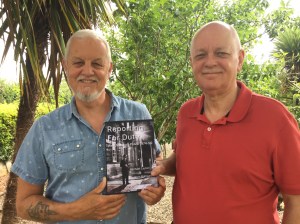
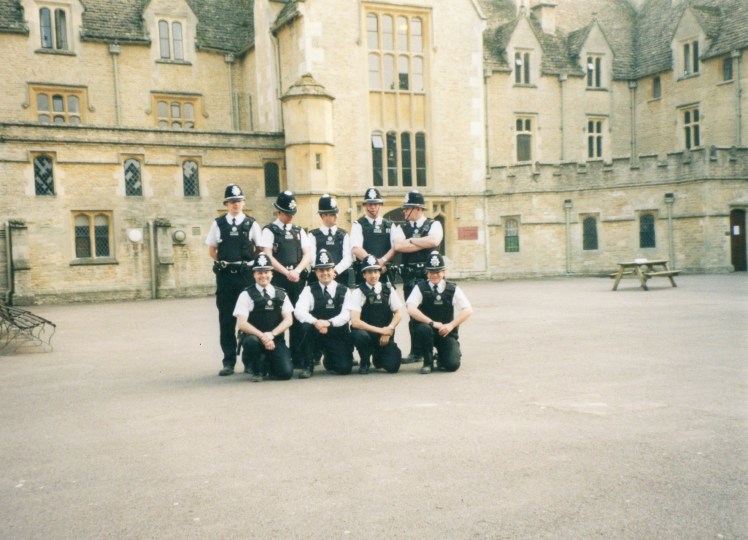
The last one in this little series for a while. Some of the previous blog posts have made reference to the challenges now faced by officers and the changes that have occurred in terms of numbers, culture, legislation, funding and all manner of things which have changed the policing landscape in the UK. What has NOT changed is the team spirit and close relationships which are developed in the service. There may be fewer to call on but when the shout ‘officer requires assistance’ goes up over the radio everyone goes and that’s the way I believe it will always be. Still a ‘noble cause’ to work within and arguably one of the best professions to be part of. (picture courtesy of Darren Allison) wfli - darren alison -1
How Policing Has Changed (39)

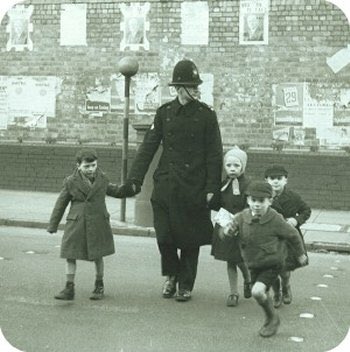
Historically the three essential strands of policing in the UK have been education through engagement and education, prevention and enforcement. They remain so to this day. As a 24/7 emergency service however the one element of policing that has to be serviced is ‘response’ which inevitably means that with reducing numbers the time to carry out education/engagement functions becomes restricted. Less engagement with the community on the ‘softer’ side of policing leads to less community intelligence becoming available. By its very nature ‘response’ policing is generally reactive and demand led. Demand is increasing and therefore the opportunities for proactive targeted prevention patrols are decreased. With changes in legislation, and direction in relation to the use of enforcement powers what type of service are we heading towards. (Photo from unknown source on social media) Last post on this little series tomorrow.birminghams front line - pc crossing children

How Policing Has Changed (38)

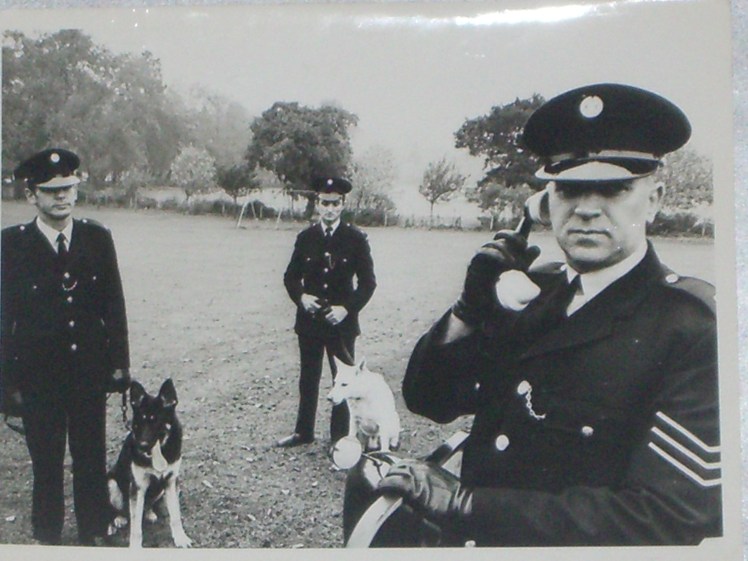
Historically ‘private’ police forces have always been a feature of policing in the UK. Over the decades some have disappeared, whilst some have amalgamated with other Forces. (The picture is of Birmingham Parks Police circa 1980s). The ‘police family’ used to be quite a narrow expression which accurately described the work of warranted police officers. I would venture to suggest that the extended ‘policing family’ as well as encompassing police staff members, Special Constablesbirminghams front line - father george and volunteers,  now also arguably describes an environment whereby many ‘policing’ functions are also carried out by professionalized security companies. The days of so-called ‘man-guarding’ alone no longer accurately describe the immense range of services now on offer many of which support our policing effort.

How Policing Has Changed (37)

In 2002 this fifty square mile area of parts of the Borough of Walsall in the West Midlands was policed by nearly four hundred police officers and police staff and nearly one hundred Special Constables working from four local police stations. How many are there now as Forces face ever increasing

operational demands and financial constraints? Policing tends to move in cycles and I share the hope of many that police numbers will rise again to the levels that will provide the public with a more effective level of service.

How Policing Has Changed (36)

The manner in which police forces communicate has changed dramatically over the years and the use of a whistle and the days of the ‘Pye’ radios when officers carried a  separate  transmitter and a receiver are long gone. (picture courtesy of retired Superintendent Tony Thompson British Transport Police) who were forerunners in the use of multi-channel radios). Historically however the service has always been somewhat fragmented in terms of its approach to information technology as separate Forces pursued their own preferred options. What is the state of ‘joined up thinking’ today as Forces struggle to work within their constrained

budgets?

How Policing Has Changed (35)

Historically the bed-rock of British policing was based on the principle that you joined as a constable and after successfully completing two years probation went on to diversify in the service whether that be within a specialist field, promotion or both. There was a time for learning ‘street craft’, making mistakes, gaining professional skills and learning how to survive in moments of confrontation. It was all about understanding what made the police service tick in terms of culture, ‘can do’ and resilience and what made individuals place themselves in harms way to protect the public. Learning the ‘heart-beat’ of any organisation is rarely found in a manual of guidance. More recently several Forces are looking to recruit direct entrant Inspectors and Superintendents who have previous management experience. Clearly there are examples where this approach has worked successfully but is it the right time to adopt this approach in the UK Police Service. In my humble opinion whilst the service needs good managers what it desperately needs is leaders who know how to ‘press the right buttons’ to successfully lead with ever shrinking operational resources, based on first hand experience,

combined with a strategic understanding as to how to challenge the present Government thinking that providing additional policing powers rises above the need to have sufficient staff to use them.

How Policing Has Changed (34)

Today’s offering from ‘One In For D & D’ is ‘Hobby Bobby’.  This used to be a less than affectionate term used by ‘regular’ officers for Special Constables. Decades ago volunteer Special Constables were not always treated with the respect that they deserved. Nowadays that has changed dramatically as the Special Constabulary throughout the UK has become increasingly professionalized to the point where Specials training has reinforced their roles as being an essential part of today’s policing effort. With 25,000 less regular officers in the UK the work of Special Constables serving in various roles has never been more necessary. The picture is of H2 OCU Special Constabulary at Bloxwich circa

2002 – a great bunch of committed individuals who served the local communities well.

How Policing Has Changed (33)

Today’s slang word from ‘One In For D & D’ is ‘The Dream Factory’. Traditionally operational officers have an ‘interesting perspective’ about their colleagues who work in Headquarters functions. This is the place where officers believe that senior officers ‘float around in the clouds’ dreaming up new schemes. The perception, whether true or not, is that some ideas originate from other peoples thoughts which are then  re-badged and re-invented on the basis of ‘what comes around goes around’. This is all part of police culture where pessimism is always balanced with ‘can do’ attitudes. So whats changed? – probably not that much.

How Policing Has Changed (31)

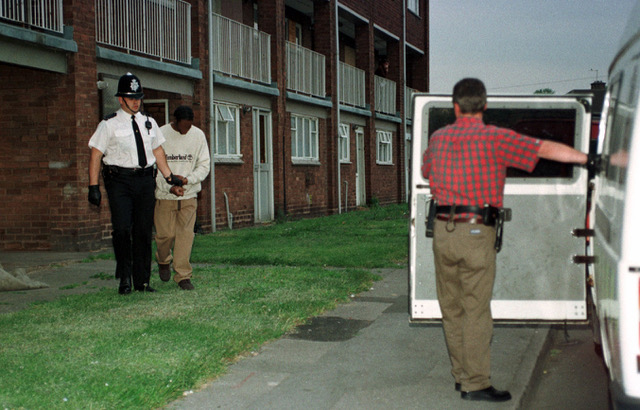
Today’s offering from our little book ‘One In For D & D’ is the phrase ‘turning someone or something over’ which means searching someone or a thing such as an address. Decades ago pick-axe handles, lump hammers or even a strong shoulder or a ‘peg’ (truncheon) were the favoured implements used to force open doors and windows. Nowadays to cope with reinforced and double-glazed doors more sophisticated equipment is used to to gain a fast entrance used by trained officers wearing protective equipment to shouts of ‘Police-Police’ as they enter. We now also live in the days of documented risk assessments and arguably increased bureaucracy. (Picture courtesy of the Walsall Express & Star)wfl ii - fishnet 1